The Data Dictionary
Federal and State education authorities capture information about their stakeholders to model the needs of the schools and students in their care, for purposes such as:
- Educational outcomes – e.g. social equity, identifying under-resourced communities or schools
- Resource allocation – e.g. additional funding for materials or personnel
- Future infrastructure – e.g. additional early learning centres for areas experiencing population growth
This information is captured across different government levels and departments. That capture is made complicated, because there are usually no standardised definitions applied between agencies for the data types collected.
This means that the same data type may have a slightly different meaning depending on the purpose it is being collected and who is collecting it.
This creates additional workload for schools when meeting compliance and reporting requirements. For example, if two government agencies issue surveys with different interpretations of a ‘full-time study load’, schools cannot re-use data they have previously collected.
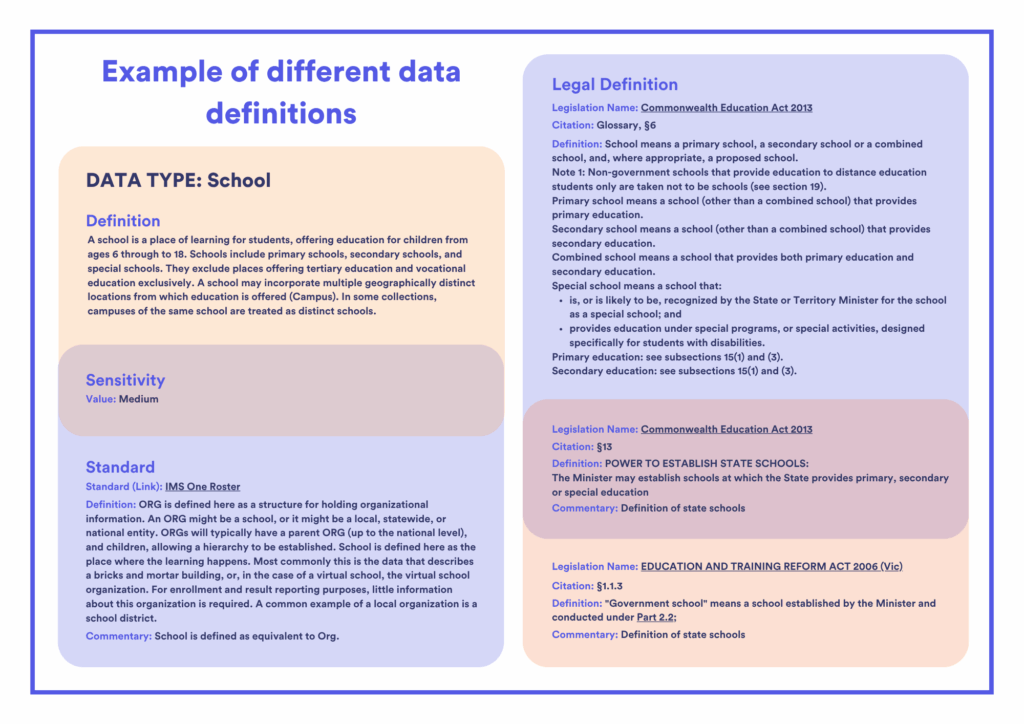
The Data Dictionary was commissioned by the State, Territory and Federal Departments of Education to create a framework to help understand how different agencies collect information. It is a centralised database that collates the most used education terms nationally, and provides information on the following:
- A general definition of the data type
- Related data standards – SIF, 1Edtech
- Legal definitions – federal and state
- Sensitivity of the data type – protected, non-personal, personal
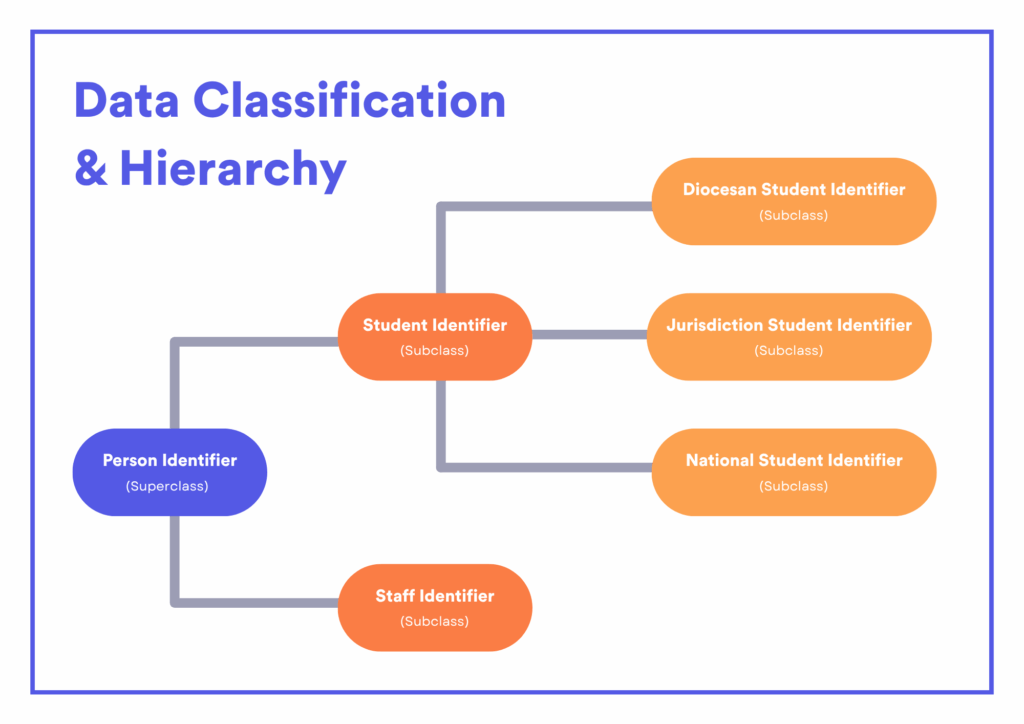
- Relationships between data types, and hierarchy of data classification (superclass, subclass, object, attribute).
The Data Dictionary registers data types captured across 12 national government collections, and outlines the business rules each agency uses to define how the data is to be interpreted. The Data Dictionary can be referenced to coordinate data collection activities across state and federal government. Agencies can search the database to see who is already collecting the data they are seeking and use it to inform the data definitions for future surveys. The benefits include:
- Enterprise data modelling – helps agencies organise and plan how to set up future and current databases
- Efficient data collection – streamlines the collection of new data e.g. schools can re-submit data collected in previous surveys
- Machine Readable – the definitions from the Data Dictionary can be imported into existing databases (JSON)